
Una guida pratica di ingegneria per scegliere tra Dominio dell'aria, Fondo e coniatura per la lavorazione della lamiera
In premere il freno piegatura, il metodo di piegatura è una delle decisioni più importanti che influenzano la precisione dell'angolo, il ritorno elastico, tonnellaggio, durata degli utensili, raggio interno, qualità della superficie e costi di produzione.
Molti problemi di piegatura non sono causati dalla pressa piegatrice stessa. Sono dovuti all'utilizzo di un metodo di piegatura inadeguato al materiale, alla geometria del pezzo, al volume di produzione, ai requisiti di precisione o alla capacità disponibile della macchina.
I tre metodi di piegatura più comuni con la pressa piegatrice sono: piegatura dell'aria, battitura e coniatura. Ciascun metodo può produrre pezzi accurati se applicato correttamente, ma ognuno si comporta in modo diverso. piegatura dell'aria è flessibile e ampiamente utilizzato nella moderna produzione di presse piegatrici CNC. La formatura a fondo offre una migliore stabilità dell'angolo per lavori ripetuti. La coniatura riduce al minimo il ritorno elastico attraverso la formatura ad alta pressione, ma richiede anche la massima tonnellaggio e pone la massima pressione sugli utensili e sulla macchina.
Questo white paper spiega il funzionamento di questi tre metodi di piegatura, le loro differenze e come i produttori possono scegliere il metodo più adatto in base al tipo di materiale, allo spessore, alla lunghezza della piega, alla precisione richiesta, al comportamento di ritorno elastico, agli utensili e agli obiettivi di produzione.
|
Messaggio chiave |
Lettura pratica |
|
La scelta del metodo di piegatura è una decisione ingegneristica. |
Il metodo migliore dipende dal materiale, dallo spessore, dai requisiti di precisione, dagli utensili, dal tonnellaggio e dal volume di produzione. |
|
piegatura dell'aria è il più flessibile. |
È ideale per la moderna produzione CNC, la lavorazione di pezzi misti, angoli multipli e applicazioni a basso tonnellaggio. |
|
Il fondo migliora la stabilità angolare. |
Può essere utile per lotti ripetuti quando le condizioni degli utensili e dei materiali sono costanti. |
|
La coniazione minimizza rimbalzo ma richiede cautela. |
Dovrebbe essere preso in considerazione solo quando la capacità della macchina, la portata degli utensili e le esigenze di produzione giustificano l'elevata forza applicata. |
La stessa pressa piegatrice, la stessa materialee gli stessi utensili possono produrre risultati diversi a seconda del metodo di piegatura utilizzato. Una piega di 90 gradi può essere ottenuta mediante piegatura dell'aria, fondo o coniatura, ma il processo di formatura che porta a quell'angolo finale è molto diverso.
La scelta del metodo di piegatura influisce sul tonnellaggio richiesto, sul comportamento di ritorno elastico, sul raggio interno, sulla ripetibilità dell'angolo, sull'usura degli utensili, sulla marcatura superficiale, sulla flessibilità di impostazione, sulla velocità di produzione e sulla regolazione da parte dell'operatore. Ciò significa che la scelta non è una questione teorica, ma incide direttamente sulla qualità, sui costi, sulla durata della macchina e sulla costanza della produzione.
Un'azienda che sceglie la piegatura ad aria per una produzione flessibile può ridurre i cambi utensile e i tempi di setup. Un'azienda che utilizza la formatura a fondo per la produzione di pezzi ripetuti può migliorare la stabilità angolare. Un'azienda che applica la coniatura senza verificarne il tonnellaggio può sovraccaricare gli utensili, ridurne la durata o creare sollecitazioni inutili sulle macchine.
Il metodo di piegatura migliore non è sempre il più preciso in teoria. È il metodo che meglio bilancia precisione, ritorno elastico, tonnellaggio, durata degli utensili, flessibilità, comportamento del materiale e costi di produzione.
La maggior parte delle operazioni di piegatura con pressa piegatrice può essere compresa attraverso tre metodi principali: piegatura dell'aria, battuta e coniatura. La differenza fondamentale sta nel modo in cui la lamiera entra in contatto con il punzone e la matrice durante la formatura.
· In piegatura dell'aria, il foglio entra in contatto con la punta del punzone e le due spalle della matrice, ma non entra completamente in contatto con il fondo della Apertura a VL'angolo finale è controllato principalmente dalla profondità del punzone.
· Nella piegatura dal basso, la lamiera viene pressata più vicino all'angolo della matrice. Il materiale ha un contatto maggiore con l'utensile, il che riduce il ritorno elastico rispetto alla piegatura in aria.
· Nella coniatura, la lamiera viene compressa con una pressione molto elevata in modo da provocare una maggiore deformazione plastica nella zona di piegatura. Ciò riduce notevolmente il ritorno elastico, ma richiede una forza di trazione molto maggiore.
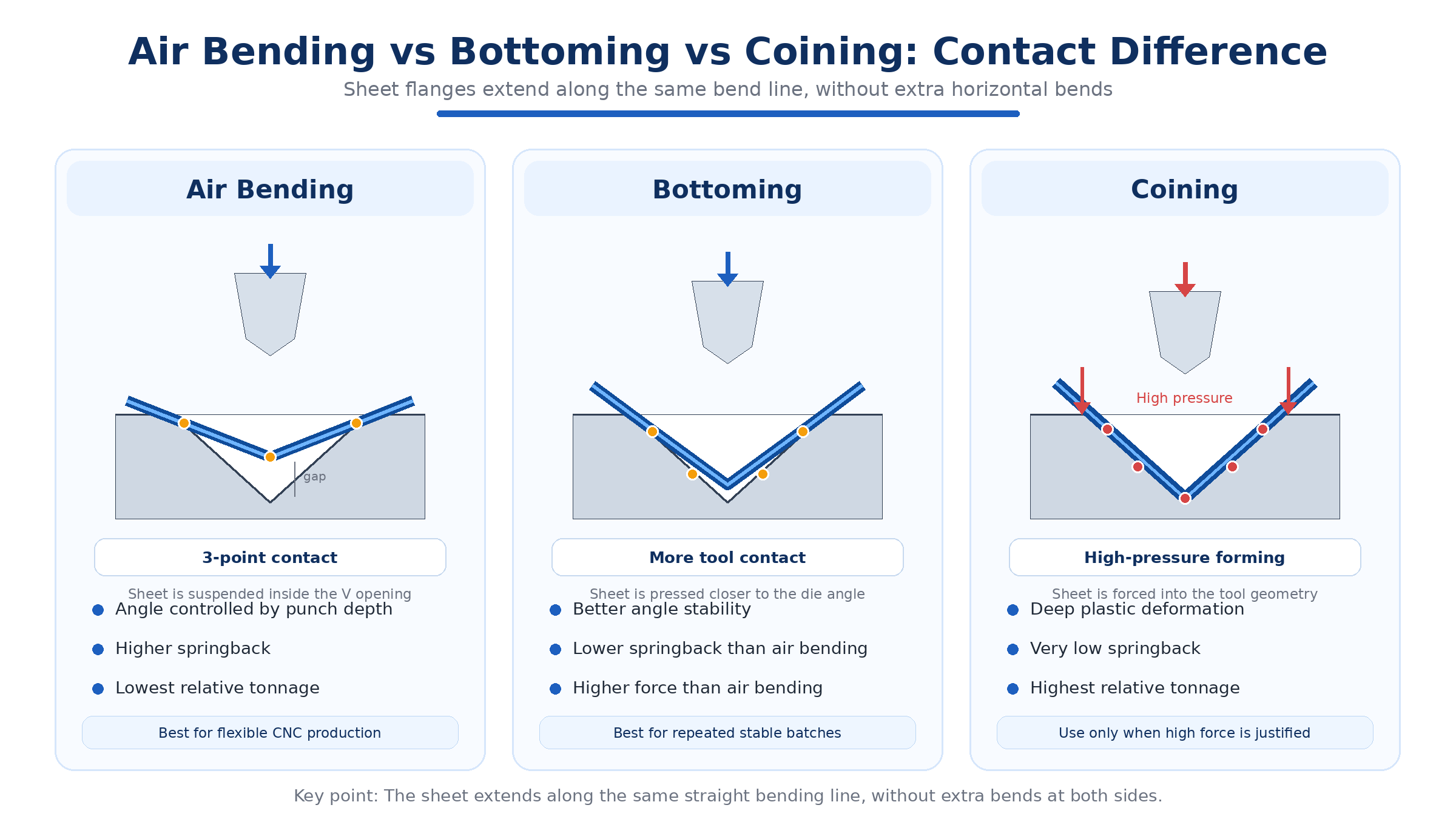
Figura 1. La piegatura ad aria, la formatura a fondo e la coniatura differiscono principalmente per il modo in cui la lamiera entra in contatto con il punzone e con l'apertura a V verso l'alto durante la formatura.
La piegatura ad aria è il metodo di piegatura più utilizzato nella moderna produzione di presse piegatrici CNC. Nella piegatura ad aria, la lamiera è supportata dalle due spalle della matrice a V mentre il punzone preme il materiale verso il basso. Il materiale non entra completamente in contatto con il fondo della matrice. L'angolo di piegatura finale è controllato dalla profondità di discesa del punzone nella matrice. Apertura a V.
Poiché la profondità del punzone controlla l'angolo, lo stesso set di punzoni e matrici può spesso produrre più angoli di piegatura. Ad esempio, un set di utensili può formare 90 gradi, 88 gradi o 92 gradi cambiando la posizione del punzone. Ciò rende la piegatura ad aria estremamente flessibile per le officine che lavorano parti diverse, materialie dimensioni dei lotti.
· Requisiti di tonnellaggio inferiori
· Elevata flessibilità per diverse parti e angoli di piegatura
· Riduzione dell'usura degli utensili rispetto ai metodi che richiedono una maggiore forza.
· Configurazione più rapida per la produzione mista
· Adatto per la correzione e la compensazione angolare CNC
· Capacità di formare angoli multipli con un unico set di utensili
La principale limitazione della curvatura dell'aria è rimbalzoPoiché il materiale non è completamente vincolato dalla matrice, il recupero elastico dopo lo scarico ha un effetto più marcato sull'angolo finale. La piegatura ad aria è inoltre più sensibile alle variazioni di qualità del materiale, alle variazioni di spessore, al carico di snervamento, all'apertura della matrice a V, al raggio del punzone, alla lunghezza di piegatura e alla ripetibilità della macchina.
· Produzione flessibile
· Piccoli e medi lotti
· Angoli di piegatura multipli
· Capacità di tonnellaggio limitata
· Riduzione dei frequenti cambi utensile
· Flussi di lavoro per la compensazione CNC e l'ispezione del primo pezzo
La piegatura dal basso, talvolta chiamata anche piegatura dal basso, è un metodo in cui la lamiera viene pressata più saldamente nella cavità dello stampo rispetto alla piegatura ad aria. Il materiale viene formato più vicino all'angolo dello stampo e il risultato finale è maggiormente influenzato dalla geometria dell'utensile.
La formatura a fondo non utilizza la stessa pressione estrema della coniatura, ma richiede una forza di formatura maggiore rispetto alla piegatura ad aria. Riduce il ritorno elastico rispetto alla piegatura ad aria e può fornire una migliore stabilità angolare quando le condizioni di utensile, materiale e impostazione sono controllate.
· Migliore stabilità angolare rispetto alla piegatura ad aria nella produzione ripetuta
· Ritorno elastico ridotto rispetto alla flessione dell'aria
· Buona ripetibilità quando utensili e materiali sono stabili
· Minore dipendenza da piccole regolazioni della profondità di punzonatura
La piegatura a fondo piatto è meno flessibile della piegatura ad aria. In genere richiede utensili più vicini all'angolo finale desiderato. Se la produzione richiede molti angoli diversi, la piegatura a fondo piatto potrebbe richiedere più cambi di utensile o utensili dedicati. Inoltre, aumenta la forza di formatura e il carico sull'utensile rispetto alla piegatura ad aria.
· Lotti ripetuti
· Materiali stabili
· Angoli di punzone e matrice corrispondenti
· Requisiti di stabilità angolare più elevati
· Tonnellaggio sufficiente delle macchine
· Produzione in cui la ripetibilità è più importante della flessibilità degli utensili.
La coniatura è il metodo di piegatura che richiede la maggiore forza tra i tre. Nella coniatura, il punzone applica una pressione molto elevata per forzare il materiale nella geometria dello stampo. La pressione è sufficientemente alta da creare una deformazione plastica più profonda nella zona di piegatura, il che riduce il recupero elastico e minimizza il ritorno elastico.
La coniatura può garantire un'eccellente ripetibilità in applicazioni specifiche, ma richiede una forza di trazione molto maggiore rispetto alla piegatura ad aria o alla formatura a fondo piatto. Inoltre, aumenta l'usura degli utensili e sottopone la macchina a un carico maggiore.
· Ritorno elastico molto basso
· Elevata ripetibilità angolare in applicazioni idonee
· Controllo preciso sulla geometria finale
· Minore dipendenza da compensazione del ritorno elastico
La limitazione più importante della coniazione è tonnellaggioUna macchina con una capacità sufficiente per la piegatura ad aria non ha automaticamente una capacità sufficiente per la coniatura. La coniatura può sovraccaricare la pressa piegatrice, danneggiare gli utensili, aumentare i segni superficiali e creare sollecitazioni inutili sulla macchina se applicata senza un'adeguata verifica ingegneristica.
· Componenti speciali di precisione
· Requisiti di ritorno elastico molto bassi
· Spessore del materiale ridotto o adeguato e lunghezza di piega
· Capacità sufficiente della pressa piegatrice
· Utensili progettati e certificati per resistere ad alte forze
· Requisiti di produzione che giustificano una maggiore forza e usura degli utensili
Tutti e tre i metodi possono produrre pezzi precisi, ma il loro comportamento in fase di produzione è differente. La piegatura ad aria offre la massima flessibilità. La formatura a fondo piatto migliora la stabilità angolare. La coniatura offre il minor ritorno elastico, ma richiede la forza maggiore e una verifica più accurata.
|
Dominio dell'aria |
Fondo |
Conio |
|
|
Tonnellaggio relativo |
Basso |
Mezzo |
Molto alto |
|
Springback comportamento |
Più alto |
Più basso della curvatura dell'aria |
Molto basso |
|
flessibilità produttiva |
Alto |
Mezzo |
Basso |
|
Usura degli utensili |
Basso |
Mezzo |
Alto |
|
Ripetibilità dell'angolo |
Buono con compensazione |
Elevata con utensili abbinati |
Molto elevato nelle applicazioni idonee |
|
Miglior utilizzo |
Produzione flessibile e lotti misti |
Lotti ripetuti e materiali stabili |
Componenti speciali di precisione con capacità verificata |
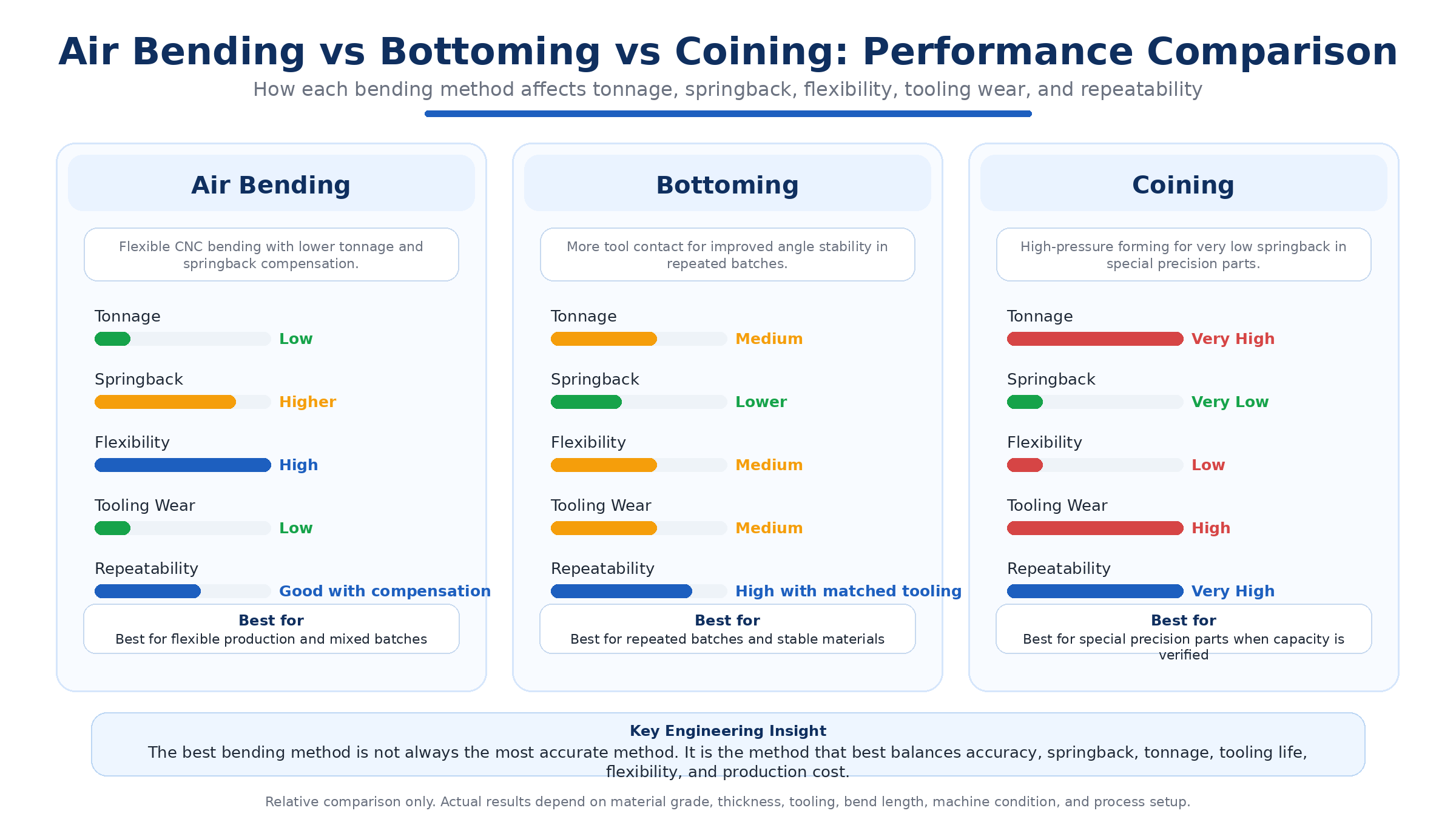
Figura 2. Confronto pratico delle prestazioni di piegatura ad aria, battuta e coniatura in termini di tonnellaggio, ritorno elastico, flessibilità, usura degli utensili, ripetibilità e idoneità all'applicazione.
Il ritorno elastico è una delle principali differenze tra piegatura ad aria, stampaggio a caldo e coniatura. Nella piegatura ad aria, il ritorno elastico è solitamente più elevato perché il materiale non è completamente vincolato dallo stampo. L'angolo finale dipende fortemente dall'elasticità del materiale e dai valori di compensazione.
Nella piegatura a fondo, il ritorno elastico è ridotto perché il materiale viene formato più vicino all'angolo della matrice. L'utensile ha maggiore influenza sulla geometria finale rispetto alla piegatura ad aria.
Nella coniatura, il ritorno elastico è minimo perché l'alta pressione crea una deformazione plastica più profonda nella zona di piega. Tuttavia, un basso ritorno elastico non significa che la coniatura debba essere sempre scelta. La forza richiesta e le sollecitazioni sugli utensili devono essere giustificate dalle esigenze di produzione.
|
Metodo |
Tendenza al ritorno elastico |
Interpretazione ingegneristica |
|
piegatura dell'aria |
Più alto |
Richiede una compensazione specifica per il materiale e la verifica del primo pezzo. |
|
Fondo |
Inferiore |
Un maggiore contatto dell'utensile contribuisce a stabilizzare l'angolo finale. |
|
Conio |
Molto basso |
L'alta pressione riduce il recupero elastico ma aumenta il carico sulla macchina e sugli utensili. |
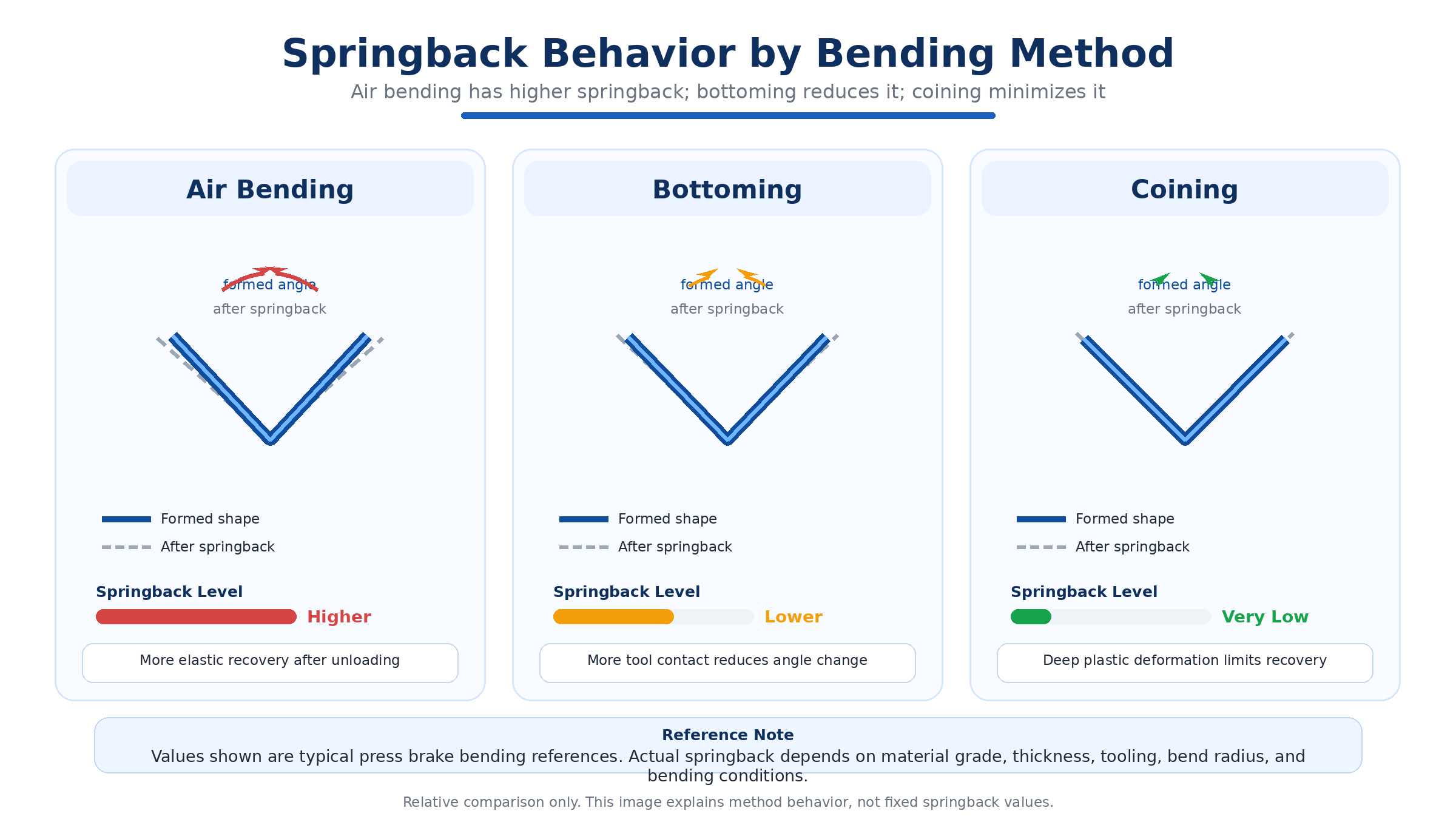
Figura 3. Comportamento relativo del ritorno elastico in base al metodo di piegatura. I valori riportati sono riferimenti tipici per la piegatura con pressa piegatrice, non specifiche fisse del materiale.
Il metodo di piegatura ha un impatto significativo sul tonnellaggio richiesto. La piegatura ad aria richiede la forza minore perché il materiale viene formato tramite contatto a tre punti. La piegatura a fondo richiede una forza maggiore perché il materiale viene pressato più saldamente nello stampo. La coniatura richiede la forza maggiore perché il materiale viene spinto in profondità nella geometria dell'utensile.
Questo è uno dei motivi più importanti per cui la coniatura deve essere utilizzata con cautela. Se una macchina ha una capacità sufficiente per la piegatura ad aria, non ha automaticamente una capacità sufficiente per la battuta o la coniatura.
Prima di selezionare o modificare un metodo di piegatura, i produttori devono verificare lo spessore del materiale, la lunghezza della piega, la resistenza del materiale, l'apertura della matrice a V, il tipo di utensile, la capacità della pressa piegatrice e il margine di sicurezza.
|
Metodo |
Requisiti relativi di tonnellaggio |
Lettura pratica |
|
piegatura dell'aria |
Basso |
Minore carico sulla macchina e minore sollecitazione sugli utensili. |
|
Fondo |
Mezzo |
Forza maggiore rispetto alla piegatura ad aria, con maggiore contatto dell'utensile. |
|
Conio |
Molto alto |
La capacità della macchina e la portata degli utensili devono essere verificate prima dell'uso. |
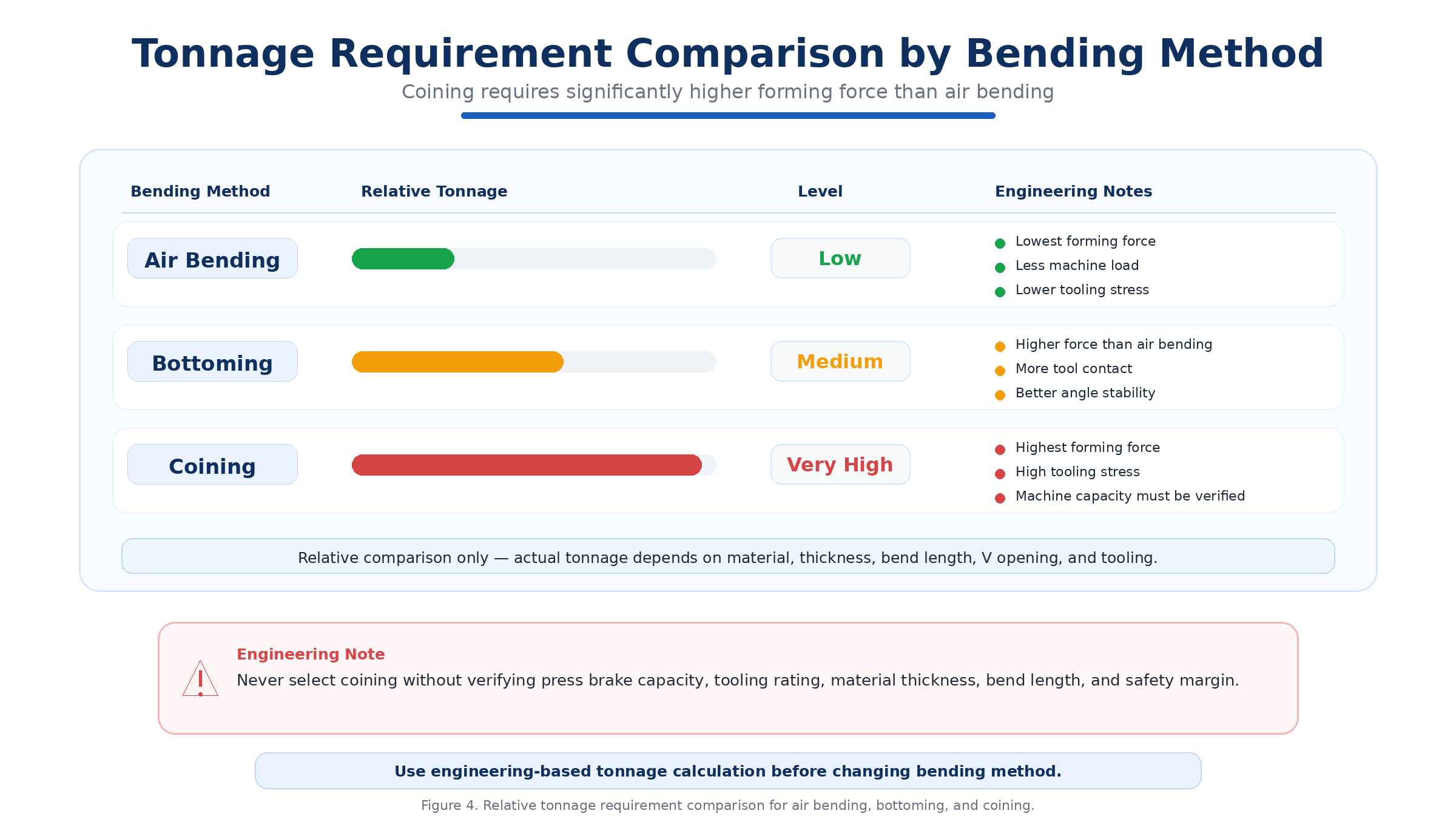
Figura 4. Confronto del tonnellaggio relativo richiesto in base al metodo di piegatura. La coniatura non dovrebbe essere scelta senza aver prima verificato la capacità della macchina, la portata degli utensili, lo spessore del materiale, la lunghezza della piega e il margine di sicurezza.
Un'altra differenza importante tra i tre metodi riguarda il raggio interno. Nella piegatura ad aria, il raggio interno è fortemente influenzato dall'apertura della matrice a V. Un'apertura a V più ampia generalmente produce un raggio interno maggiore, mentre un'apertura più piccola produce un raggio più stretto e una maggiore forza di formatura.
Nella formatura a fondo, il raggio interno è influenzato maggiormente dalla geometria del punzone e della matrice perché il materiale viene pressato più vicino all'angolo dell'utensile. Nella coniatura, il raggio è controllato in modo ancora più diretto dalla geometria dell'utensile perché il materiale viene forzato nella forma dell'utensile ad alta pressione.
Ecco perché la selezione del metodo di piegatura non dovrebbe mai essere separata da selezione degli utensiliUn metodo che in teoria sembra corretto può comunque fallire se il raggio del punzone, Apertura a Vl'angolo dello stampo o la capacità dell'utensile non sono adatti al materiale e ai requisiti di piegatura.
La scelta tra piegatura ad aria, battitura e coniatura dovrebbe basarsi sulle esigenze di produzione piuttosto che sull'abitudine. La decisione dovrebbe tenere conto di precisione, ritorno elastico, capacità della macchina, utensili, comportamento del materiale, volume di produzione e costi.
· Hai bisogno di una produzione flessibile.
· Si lavorano molte parti diverse.
· Sono necessari angoli di piegatura multipli.
· Si desidera un tonnellaggio inferiore e una minore usura degli utensili.
· È disponibile la compensazione CNC.
· L'ispezione del primo pezzo fa parte del processo.
· Hai bisogno di una maggiore stabilità angolare rispetto alla flessione dell'aria.
· I lotti di produzione vengono ripetuti.
· Gli utensili vengono adattati all'angolo richiesto.
· La varietà dei materiali è limitata.
· La capacità di tonnellaggio è sufficiente.
· La flessibilità è meno importante della ripetibilità.
· È richiesto un ritorno elastico molto basso.
· È richiesta un'elevatissima ripetibilità angolare.
· La capacità della macchina è stata verificata.
· Gli utensili sono progettati e classificati per la coniatura.
· La marcatura della superficie è accettabile o controllata.
· Le esigenze di produzione giustificano forze maggiori e una maggiore usura degli utensili.
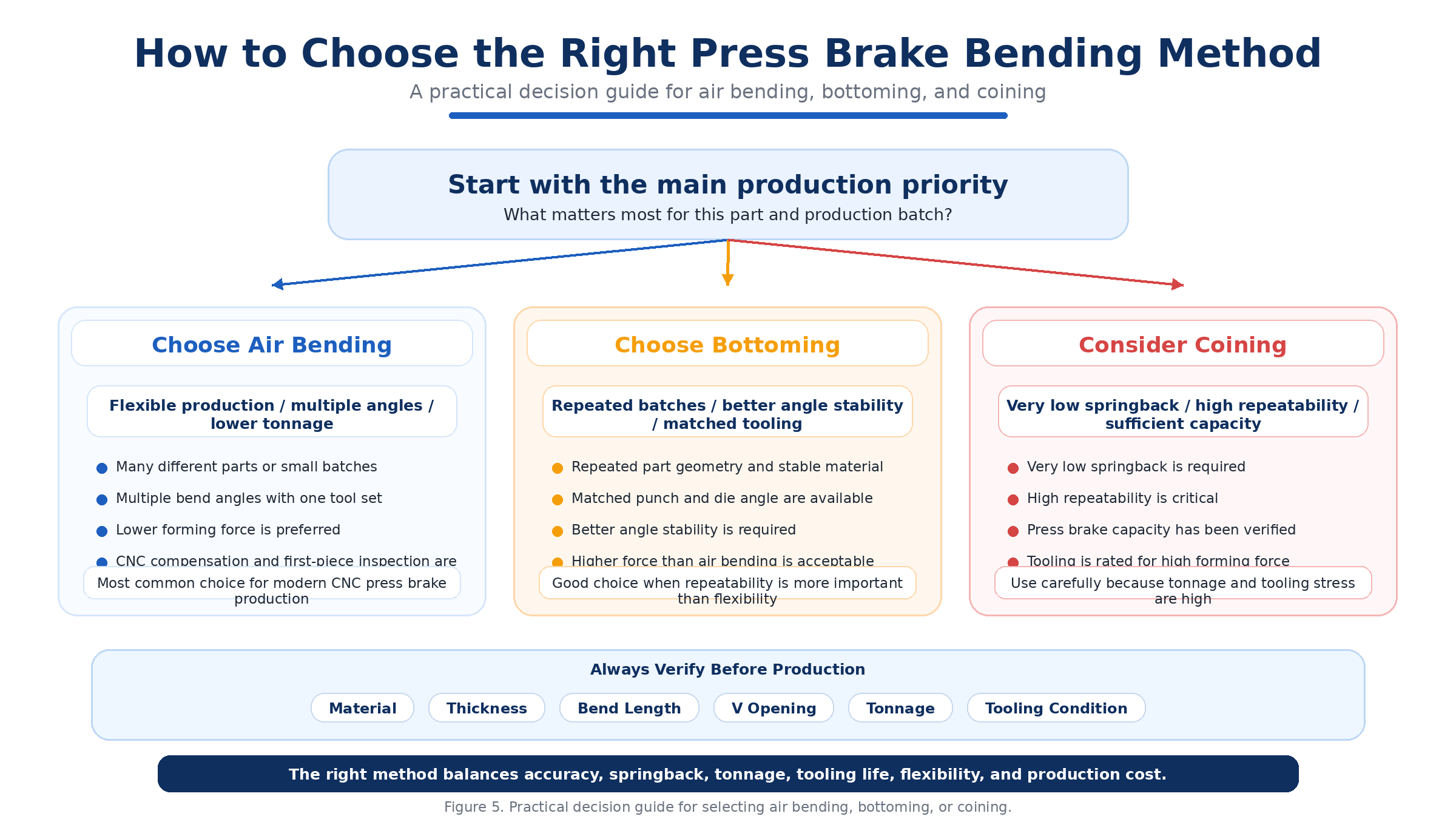
Figura 5. Guida pratica per la scelta tra piegatura ad aria, formatura a fondo o coniatura in base alla priorità di produzione, al ritorno elastico, al tonnellaggio, agli utensili e ai requisiti di ripetibilità.
La flessione dell'aria è flessibile, ma richiede una compensazione. Se si ignora il ritorno elastico, l'angolo finale potrebbe essere maggiore del previsto.
L'acciaio dolce, l'acciaio inossidabile, l'acciaio zincato e l'alluminio non si piegano allo stesso modo. È fondamentale disporre di dati specifici per ciascun materiale.
La finitura dipende fortemente dalla geometria dell'utensile. Se l'angolo del punzone e della matrice non sono adatti, i problemi di angolazione potrebbero persistere.
La coniatura può richiedere una forza molto elevata. Utilizzarla senza averne verificato la capacità può danneggiare gli utensili o sovraccaricare la pressa piegatrice.
Il metodo più preciso non è sempre il metodo di produzione migliore. Anche la durata degli utensili, il carico della macchina, i tempi di setup e la flessibilità sono fattori importanti.
La scelta del metodo di piegatura dovrebbe essere una decisione ingegneristica basata su materiale, spessore, lunghezza della piega, requisiti di precisione, utensili e volume di produzione.
Un produttore di coperture in acciaio inossidabile ha riscontrato angoli finali incoerenti utilizzando la piegatura ad aria. Gli utensili e la macchina erano in buone condizioni, ma l'angolo finale variava tra i diversi lotti di materiale. La causa principale era la variazione del ritorno elastico. La soluzione non è stata quella di abbandonare la piegatura ad aria, ma di creare valori di compensazione del ritorno elastico specifici per ciascun materiale e di verificare il primo pezzo prima della produzione. La piegatura ad aria è rimasta il metodo migliore perché la produzione richiedeva flessibilità.
Un'azienda produttrice di staffe in acciaio dolce, realizzate in serie, desiderava angoli più stabili e tempi di ispezione più brevi. Il design del pezzo, il materiale e il volume di produzione erano stabili. Dopo aver valutato utensili e impostazioni ottimali, l'azienda ha utilizzato la lavorazione a fondo piatto per migliorare la stabilità dell'angolo tra lotti ripetuti. In questo caso, la ripetibilità era più importante della massima flessibilità degli utensili.
Un'azienda produttrice di piccoli componenti di precisione richiedeva un ritorno elastico molto basso e una ripetibilità angolare ristretta. La piegatura ad aria generava una variazione eccessiva del ritorno elastico, mentre la piegatura a fondo piatto migliorava il risultato ma non soddisfaceva pienamente i requisiti di tolleranza. Si è quindi optato per la coniatura, poiché lo spessore del materiale e la lunghezza di piega erano adatti e la capacità della macchina era sufficiente. Con un'attrezzatura adeguata e un setup controllato, la coniatura ha ridotto il ritorno elastico e migliorato la ripetibilità. Questo esempio dimostra che la coniatura conserva la sua utilità in applicazioni speciali, ma solo quando la forza richiesta e le condizioni dell'attrezzatura sono giustificate.
|
Elemento da ispezionare |
Stato |
|
Tipo e grado del materiale confermati |
□ |
|
Spessore del materiale verificato |
□ |
|
Lunghezza della curva confermata |
□ |
|
Angolo di piega richiesto definito |
□ |
|
Necessario raggio interno confermato |
□ |
|
Revisione dei requisiti di qualità della superficie |
□ |
|
Ripresa prevista |
□ |
|
Apertura della matrice a V selezionata |
□ |
|
Raggio di punzonatura verificato |
□ |
|
Capacità di tonnellaggio della macchina verificata |
□ |
|
Condizioni degli utensili ispezionate |
□ |
|
Volume di produzione rivisto |
□ |
|
Revisione dei requisiti di flessibilità di configurazione |
□ |
|
Piano di ispezione del primo pezzo predisposto |
□ |
La piegatura ad aria modella l'angolo controllando la profondità di punzonatura senza premere completamente il materiale nello stampo. La formatura a fondo stampo modella il materiale più vicino all'angolo dello stampo. La coniatura utilizza una pressione molto elevata per forzare il materiale nella geometria dell'utensile e ridurre al minimo il ritorno elastico.
La piegatura dell'aria è il metodo più comune nelle moderne macchine CNC. premere il freno produzione perché è flessibile, richiede un tonnellaggio inferiore e può formare angoli multipli con gli stessi utensili.
La coniatura in genere presenta un ritorno elastico minore perché applica una pressione molto elevata e crea una deformazione plastica più profonda nella zona di piegatura.
La coniatura richiede il tonnellaggio maggiore. La formatura a fondo richiede più forza rispetto alla piegatura ad aria, e quest'ultima richiede la forza minore tra i tre metodi.
La piegatura a fondo piatto può fornire una maggiore stabilità angolare nella produzione ripetuta, ma è meno flessibile. Anche la piegatura ad aria può essere precisa quando la compensazione del ritorno elastico e i dati del materiale sono controllati correttamente.
Sì, ma è meno comune negli ambienti di fabbricazione flessibile. La coniatura viene utilizzata principalmente per applicazioni speciali che richiedono un ritorno elastico molto basso e un'elevata ripetibilità, quando la capacità della macchina e gli utensili sono adeguati.
V-die L'apertura influisce sul raggio interno, sul tonnellaggio, sul ritorno elastico e sulla marcatura superficiale. È particolarmente importante nella piegatura ad aria perché il raggio interno è fortemente influenzato dall'apertura della matrice.
I produttori dovrebbero considerare il tipo di materiale, lo spessore, la lunghezza di curvatura, la precisione richiesta, il ritorno elastico, il raggio interno, le condizioni degli utensili, la capacità della macchina, il volume di produzione e il costo.
La piegatura ad aria, la formatura a fondo piatto e la coniatura non sono semplicemente tre modi per creare la stessa piega. Si tratta di approcci ingegneristici differenti con effetti diversi su ritorno elastico, tonnellaggio, usura degli utensili, raggio interno, flessibilità e costi di produzione.
La piegatura ad aria è solitamente la scelta migliore per la fabbricazione moderna flessibile. La battuta può migliorare la ripetibilità in ambienti di produzione stabili. La coniatura può ridurre al minimo il ritorno elastico in applicazioni di precisione speciali, ma richiede una precisione molto maggiore. tonnellaggio e un accurato controllo degli utensili.
Il metodo di piegatura migliore non è sempre il più preciso. È il metodo che meglio bilancia precisione, ritorno elastico, tonnellaggio, durata degli utensili, flessibilità, comportamento del materiale e costi di produzione.
I produttori che comprendono queste differenze possono ridurre gli scarti, migliorare la uniformità, proteggere gli utensili e sfruttare al meglio la capacità delle loro presse piegatrici. Per molte fabbriche, il miglioramento più significativo non deriva dal cambio di macchinari, ma dal rendere la scelta del metodo di piegatura una decisione ingegneristica strutturata.
Esplora calcolatori, riferimenti sui materiali, dati sul ritorno elastico, guide agli utensili e manuali sui metodi di piegatura nell'hub di ingegneria ZYCO: https://calculator.zycomachine.com/engineering-tools

Lascia il tuo indirizzo e -mail e i requisiti, il nostro team di vendita professionale svilupperà la soluzione più adatta per te.


Copyright
© 2026 Nanjing Zyco CNC Machinery Co., Ltd. Tutti i diritti riservati
.
 RETE SUPPORTATA
 italiano
 English
 français
 Deutsch
 русский
 português
 español
 한국의
한국의 Türkçe
 العربية